Moto: A Love Story (Hill’s Pet Nutritionist)
- Nabila Ghozali
- May 4, 2023
- 5 min read

Updated: May 21, 2023
The second audiovisual is a heartwarming campaign created by Pet Hill's Nutritionist in 2020 during COVID-19, narrating the bond between a cat, Moto and its owner, Andrea. This advertisement highlights in providing high-quality nutrition for pets with Tzvetan Todorov's narrative theory and Vladimir Propp's character archetype theory. This campaign's portrayal of pet owners as a main character made it beloved and highly successful, resonating with the target audience as pet owners. The first analysis will examine the storyline's phases, including their harmonious relationship, Andrea's struggles and her impact on Moto, Andrea's realisation and efforts for to restore balance. In the meantime, Andrea's Archetype undergoes growth and responsibility, while Moto's journey embodies the Hero Archetype as it overcomes challenges.
Part 1: Equilibrium Phase
This phase introduces the owner of the cat, Andrea, being affectionate with her pet cat, Moto, which sets harmony in their relationship. Later, Andrea feeds Moto from a cup as a portion control implying responsible pet ownership and care of Moto’s health. This particular scene with Moto eating happily afterwards sets a positive atmosphere. The equilibrium phase established the characters and narrative tone by introducing a wholesome bond between Moto and Andrea.


Figure 6 Moto's and Andrea's bonding
Part 2: Disruption

The arrival of Andrea upset in the next scene, marks the start of the Disruption phase. Her reason to be upset is shown in the box with a file written with the term “Termination.” The main objective of this phase is to gainan emotional concern from the audience, particularly those who could relate to similar situations they were going through at the time (OfficialHillsPet, 2020). The inciting incident raised many unanswered questions that tease the audience on Moto’s physical health (McKee and Gerace, 2018). It later becomes very problematic through Andrea being less affectionate towards Moto. However, Moto did not change and is unaware of the situation, while remaining playful and still gives affection to Andrea in her lowest moment, despite the change in the cat’s declined health




Figure 8 Moto's affection and actions
Every time Moto continuously requests food, Andrea directly pours dry food without portion control which is concerning since the amount significantly increased. According to Dr Beth Turner (2021), indoor cats are recommended to be fed around ⅓ to ½ cups of dry food per day with around 167 - 250 calories. The rising action progresses through many repeated scenes of Moto’s requests and being fed carelessly until Recognition of Disruption. The montage of Andrea’s behaviour and her lack of care gave the audience the same concerns on Moto’s health.
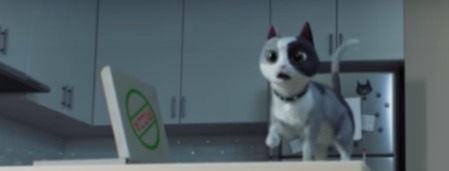

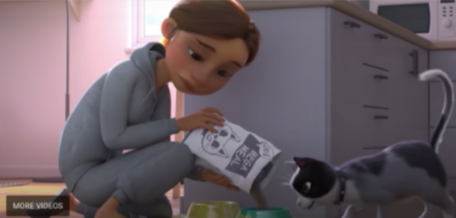

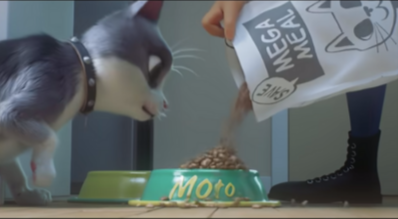


Figure 9 Rising action in Moto's health
Part 3: Recognition of disruption

The recognition of disruption starts with a climax where Moto’s weight gain is caught up. Moto struggles to jump onto the counter, despite having done so many times when requesting food. This is a clear indication of overfeeding that was taken place in the previous phase which isunsettling as overfeeding cats can lead to cat obesity and many health risks. Moto’s unsettling weight gain is a direct consequence of Andrea’s action in the Disruption phase. Andrea’s notice of Moto’s struggle is later shifted to her calendar, where a vet appointment was made. Andrea’s realisation marks a turning point into the next phase; Repair, signalling her willingness to repair her life. The recognition is vital in acknowledging the characters’ consequence and how they will overcome, which is also questioned by the audience.
Part 4: Repair
The following phase has Andrea’s efforts in repairing her life and caring for Moto. The brighter setting in the next scene suggests a positive change. Andrea’s first decision is to switch the brand of cat food to Hill’s Pet Nutrition. She later uses a measuring cup to feed Moto, bringing back her habit from the first Equilibrium Phase, and preventing overfeeding. Moreover, Andrea is also taking steps to focus on herself where she starts cleaning up her home and becoming more active alongside Moto. These actions are again, a desire to regain balance and improvement in her life. As the story of this phase progresses, there’s a noticeable improvement in Andrea’s happiness, Moto’s healthy activity levels and the cleanliness of the apartment. This phase highlights Andrea in taking back control of her life from the disruption phase and working towards a better future which the audience appreciate and relate.
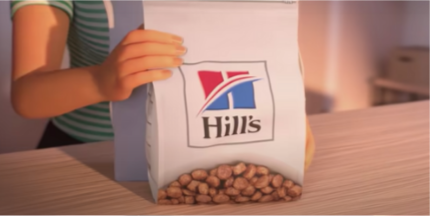

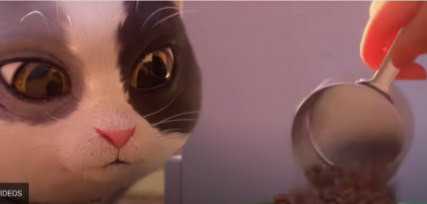

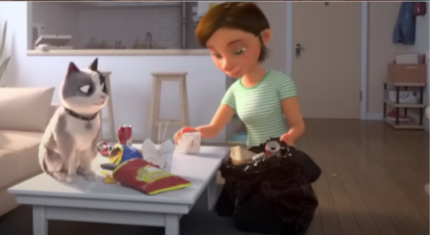

Figure 11 Andrea's repairing actions
Part 5: New equilibrium
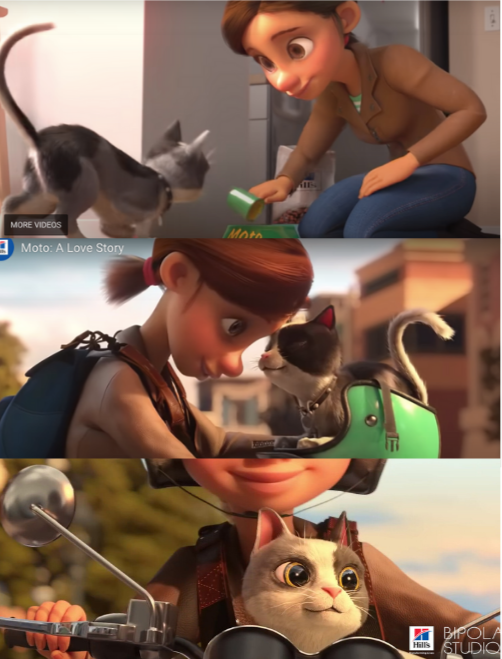
Andrea returns home from what seems to be her new lifestyle outside the apartment, then feeds Moto with a cup as another portion control. This implies returning to their normal routine after the disruption. Moto and Andrea later prepare for their nextadventure, another emphasis on returning to their normal activities. The new equilibrium proves their success in finding stability after facing disruption. While it may have similarities to the first phase, the audience recognized that the characters were entering a new chapter of their story, thereby understanding the progression and evolution of their lives.
Character’s Archetype - Andrea, the owner

Andrea's character is analysed through her development. She was shown to be overfeeding Moto with no portion control. This served as a disruption setting the story in motion after her termination. Andrea later learned what happened and started to correct herself. These corrections prove her ability to grow from Disruption to New Equilibrium, positioning her as Donor Archetype and Dispatcher Archetype which highlighted her ability to provide care for Moto and take charge when necessary. Her development throughout the narrative emphasised the importance of adaptation and learning from one's mistakes in the face of disruption.
Character’s Archetype - Moto, the cat

Moto's role in the story may seem simplistic, but, when viewed carefully, Moto's character took on a more vital role of the storyline. Moto's journey of overcoming obstacles in weight gain from overfeeding followed by improving its health is the central plot of the story, positioning Moto as Hero Archetype. Although Andrea caused Moto's weight gain, she also ultimately solved the problem with Hill's Pet Nutrition cat food as a Donor Archetype and Dispatcher Archetype. This proved how the brand accompanied Moto's transformative journey towards a better health, working alongside Andrea's contribution and her archetypes.
In conclusion, "Moto: A Love Story" masterfully utilised Tzvetan Todorov's narrative theory and Vladimir Propp's character archetype theory to deliver a compelling message about providing pets with high-quality nutrition. This effectively engaged with the target audience by portraying relatable struggles, fostering empathy and reinforcing the importance of responsible ownership. It showcases how the target audience feel content and fulfilled after connecting with the storyline and the characters. The content successfully positioned Hill's Nutrition as a trusted brand with offered solutions, and promoted how long-term commitment is required to ensure their pet felines’ optimal health and happiness.


Comments